
People Evolution
People Evolution
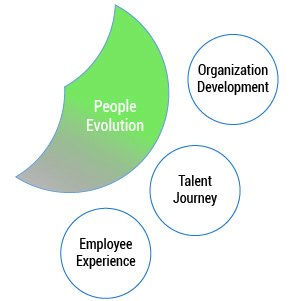
People evolution is a proactive approach to managing and developing an organization's human capital in line with its long-term strategies, goals and objectives. The approach consists of optimizing organization development, talent journey and employee experience.
Adopting this approach, demonstrates an organization's commitment to nurturing its employees, through fostering their growth, and aligning their capabilities with the needs of the business.
The benefits of investing in people evolution includes strategic alignment between employees and the organization, improved talent acquisition and retention, a more engaged and productive workforce, increased employee satisfaction and enhanced productivity.
Organization Development
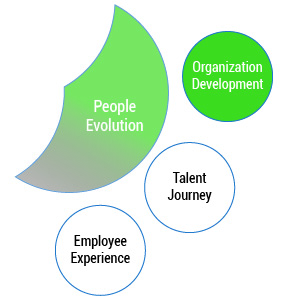
The goal of organization development is to create a more efficient, effective, and agile organization that meets the changing needs of its stakeholders and succeed in dynamic business environment.
- Restructuring: Re-designing the organizational structure to better align with business goals, optimize resource utilization and improve performance.
- Process: Improving and streamlining internal processes to ensure efficient and effective operations, across the organizational ecosystem, enhancing the delivery of products and services to internal and external customers.
- Policy: Developing and updating policies, guidelines and procedures that promote the organization’s desired culture and support effective decision-making.
- Performance: Establish a performance driven culture by implementing agile performance management systems and tools that provide managers and employees with the resources they need to succeed in their work.
- Workforce Planning: Developing and implementing workforce planning strategies to ensure the organization has the right people, with the right skills, in the right place, at the right time.
- Mobility: Leveraging the mobility of employees within and across the organization to enhance learning, development, and career growth opportunities.
Talent Journey
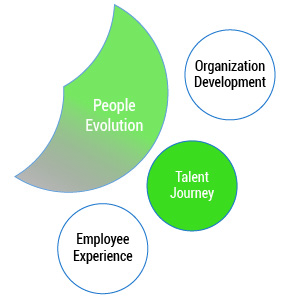
The focus of a talent journey is to identify and develop the skills and knowledge of employees, and to align their personal goals with the goals of the organization, ultimately helping to build a strong, engaged and productive workforce.
Talent Journey is an integrated approach to identifying and developing the skills and knowledge of employees that are aligned to their personal goals and the goals of the organization, resulting in a strong engaged and productive workforce.
- Talent Acquisition: Identify and bring on board the best candidates for the organization, and to do so in a cost-effective and efficient manner. It includes job analysis and design, sourcing and attracting candidates, selection and assessment, offer and negotiation, onboarding and integration.
- Assessments: Provide insight into an individual's fit for a particular role by identifying their strengths and areas for development, via an assessment or development center. Assessments include aptitude tests, personality profiles, competency-based tests, and situational judgement analysis.
- Succession: identification and preparation of internal candidates for key leadership roles to ensure smooth transitions and minimize business disruption.
- Learning & Development: offering training and development programs to support employees in acquiring new skills and knowledge, and to meet the evolving needs of the organization.
- Mentoring & Coaching: offering guidance and support to employees to help them reach their full potential and achieve their career goals.
Employee Experience
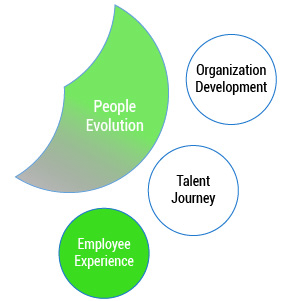
Employee experience refers to the holistic perception and interactions that an employee has with their organization, including the physical, cultural, and psychological aspects of the workplace. It encompasses all aspects of the employee journey, from recruitment to exit, and encompasses factors such as engagement, wellbeing, culture, and diversity. A positive employee experience is vital for employee satisfaction and overall organizational success.
- Employee engagement: Creating a positive and fulfilling work environment where employees feel motivated, connected, and valued.
- Employee value proposition: Defining the unique benefits and experiences that employees can expect from working with the organization.
- Employee value proposition: Defining the unique benefits and experiences that employees can expect from working with the organization.
- Culture: Developing and maintaining a strong organizational culture that aligns with the company's values and mission.
- Diversity, equity, and inclusion: Encouraging diversity, promoting fairness and equal treatment, and creating an inclusive work environment where everyone feels valued and respected.