
Financial Management Solutions

Overview
A financial management system manages all the financial transactions within a business and keeps track of the cash flows. It manages the income, expenses, and assets that the company uses. It improves short-term and long-term business performance. A good financial management system provides insight into how a business is performing and why it is doing well or not. You can make informed decisions and strategic plans in the financial management system. It can help a business be more profitable by showing an understanding of What is happening internally within the business around key financial issues.
The financial management system reduced the errors in the tax and payroll calculations. It keeps all the Records of expenses to help streamline audits.
Financial management Solution Modules are
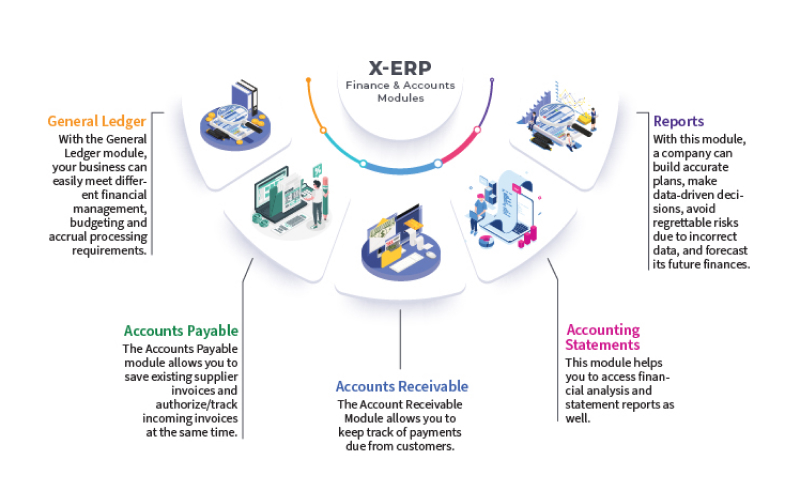
- Profit tracking:
This is the primary function of financial management. The profit tracker will help to track how the business is using financial resources and financial health. It shows where most profits are coming from. - Ledger Management:
Ledger management is a fundamental function of financial management. It provides records of all financial transactions. You’ll be able to view your entries in one central location. - Accounts Payable:
Account payable manages all the funds your company owes to your vendor and customers. It integrates your payable data with your purchasing system so you can control your cash flows. - Account receivable:
It allows your business to manage all the fund’s customers pay them. It tracks customer payments and manages invoices and cash. - Fixed asset management:
It manages all your company’s real assets, such as manufacturing equipment, computers, company cars, and office space. It gives your organization better visibility in terms of utilization, cost, and maintenance. - Risk Management:
All business leaders want to know that their organization is protected or at risk. so, risk management can predict, analyze, and manage risk. - Tax Management:
Tax management solutions manage system taxation setting and provide tax audit and tax reporting. The capabilities of your tax management depend on which system you purchase, and the system you purchase will depend on the needs of your company. - Reporting:
It shows real-time financial data. Reporting and analytics will show you where revenue is being generated and where it’s not being generated. But the dashboard can do so much more, such as displaying your sales, expected sales, expenses, and many other financial components.
Benefits of Financial Management Solutions
- Improved productivity:
Productivity will immediately increase once you automate tedious and time-wasting tasks. - Complete financial transparency:
The analytic dashboard provides all the financial information they need to know. - Informed planning and budgeting:
It allow for predicting cost and potential revenue. They can plan the budget accordingly. - Real time financial monitoring:
You will always know what is going on, from an unknown transaction to an important transaction within your financial sector. - Minimized human error:
Errors can be detected and avoided in this system, such as data entry errors. - Organization financial documents:
The digital format stops misplacing or losing documents, and they will automatically be filled in the proper place.